-
New to Newell and DDECII
Forum: Engine and Transmission Monitoring Systems
Last Post: Norton1090
Yesterday, 08:14 AM
» Replies: 4
» Views: 84 -
Air Brake Chambers
Forum: Air Operated Systems and Leaks
Last Post: Jack Houpe
Yesterday, 07:20 AM
» Replies: 5
» Views: 83 -
Our first RV, coach 210
Forum: Please introduce yourself
Last Post: Jack Houpe
Yesterday, 02:49 AM
» Replies: 5
» Views: 80 -
Power tech generator
Forum: Generators
Last Post: PMCBR
10-05-2026, 06:11 PM
» Replies: 2
» Views: 66 -
Reverse lights not workin...
Forum: Electrical
Last Post: Richard
10-05-2026, 02:24 PM
» Replies: 6
» Views: 208 -
Tag Axle Bushing Replacem...
Forum: Suspension/Tires/Wheels
Last Post: [email protected]
10-05-2026, 10:15 AM
» Replies: 3
» Views: 109 -
Front Aquahot hose leaks
Forum: Heating Systems
Last Post: [email protected]
10-05-2026, 10:14 AM
» Replies: 41
» Views: 5,824 -
New to me 2005 Newell 47 ...
Forum: Please introduce yourself
Last Post: superboop
10-05-2026, 08:16 AM
» Replies: 9
» Views: 396 -
Driver steer blow out.
Forum: Slides
Last Post: Jesse
09-30-2026, 01:03 PM
» Replies: 15
» Views: 695 -
1244 for sale
Forum: Coaches for Sale (Please read the info in the Category description)
Last Post: Sea Note
09-29-2026, 08:21 AM
» Replies: 0
» Views: 197
- Forum posts:70,773
- Forum threads:8,449
- Members:4,459
- Latest member:bigrigfixer

Free to a good home, just pay the shipping. Both worked when removed, original Sony black and white camera and monitor.

03-08-2023, 04:30 AM
Forum: Coaches for Sale (Please read the info in the Category description)
- No Replies
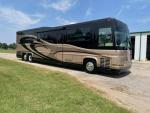
We are looking to buy another Newell. We sold our 92 a few years ago and now have time to use a new one. If you have one for sale let me know. 100k we don't need financing. [email protected] posted March 8, 2023
 I am cleaning out our coach for our upcoming trip. It is like a time capsule from the past 30 years of our family trips. I found this plastic Newell mug collection. Only people in this forum might appreciate it, LOL! Does anyone else have these, too?


I’m looking for previous owners of unit # 510 or find out some history about it thank you
Hello Everyone,
I am going to the factory in a few weeks to have some stuff done, and they are going to refresh the front/rear suspension where needed. I am trying to make sure i have the parts on hand, so, if one is needed I don;t get stuck there.
I've read through many postings regarding Shocks and have boiled it down to several part numbers.
Front--90-1710SP3
Drive--90C-1868
Tag----90C-1813 Or Maybe -->Gabriel #89436 HD
I have the Solid Front Axle with 4 Airbags (though, for some reason the factory thinks I had the Dana IFS!)
It's a 1996 #423
Can someone please confirm which are the correct ones and how many so I can order them? Even if they are not needed, I'd like to have a full set, just in case.
Thank you!

After 4 days travel from TN to Arizona we are tucked into site 104 at Lost Dutchman State Park in Apache Junction, AZ. We had an adventure getting here through Arkansas rain, OK/TX wind and mud storm and tornado warnings and finally 29 degree temps in Grants New Mexico... but all that just added to the excitement and was all worth it to be able to call this beautiful place home for 14 days... Safe Travel friends!
Paul and Angi

First off I have no 120VAC water system. It was removed before I became the steward of 484.
I have 2 12VDC RV pumps in that same bay. They are wired to be an either or system with spade connectors on the pump wires.
Last night the water stopped flowing. I swapped to the second pump and nada. I checked the voltage at the coach side of the spade connectors and 12.9VDC was there. Plug both pumps in and no pumping. I plug the spare pump in and it works as expected.
So somehow I have 2 non functioning pumps at the same time? I checked the installed "secondary" pump not more than a month ago. I was used for 2 day and then I switched back to my "main" lo volt pump.
I don't think 2 pumps would fail on the same night via coincidance.
Gibbs' Rule #39: There is no such thing as a coincidence.
I have a new in box replacement pump ready to install. I'm just hesitant to do so.
Do you have any thoughts?
Thanks and save travels.
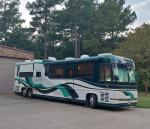
James Price Coach 647
2003 , 60 series detroit
Does anyone know where to purchase bode door rebuild kit. Newell is out till middle of March.
Thank you, James Price
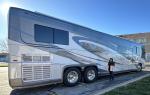
Does anyone have a recommendation for a powered windshield roller shade? Our 312 used to have curtains which we removed.
So Gurus, I have a good one that Newell never heard of......
I was in the middle of trying to run some electrical wires for the Lithium battery upgrade, and the first step was to put out the rear slide to see if there was a location that I could fish some wires near the cove moulding at the ceiling. I pushed the extend button on the rear slide, and got no movement. I was kind of sad because I have not had any issues with the slide operation. I went out to the pump while my wife Sara hit the button, and the hydraulic pump did not sound like it was under any load and was free spinning. I checked the fluid, and it was dry.
After refilling the hydraulic pump reservoir, I went back in the coach to try again. I hit the extend button for a maximum of a total of 30 seconds in a few bursts. The reservoir was empty again. I looked for leaking that I surely had, but I could not find any leak inside or outside the coach. I subsequently went to lunch, and the dextron III magically appeared under and on the side of the coach in both front wheel wells and some in the center between the front wheel wells. I was puzzled because I did not hit the front slide button at all.
I found out through researching on this site that looking at the schematics provided by others that any time the pump is on there are several circuits that have pressure in them both front and back independent of which slide you are trying to move. Surprise, but this is as designed.
The fun has begun and I have started on the work. Here is a summary of what I found out to remove for rebuilding the cylinders. I plan on rebuilding all of them, they have a few years on them and likely the seals have hardened and will start to have problems. I would rather rebuild them now, as preventative maintenance instead of having leaks every now and again in the most inopportune times....
To get the front slide front extend/retract cylinder out, there are access panels in both front wheel wells that are screwed in. On the drivers side, the access panel is just above the top of the tire nearest the center of the coach wheel well. On the passenger side, the access panel is just above the top of the tire near the outside of the coach. The panels are approximately 10-12" rectangular. On my coach, there is 2 access panels on the passenger side. A second access panel was cut directly on the passenger side directly below the front hydraulic cylinder most of the way to the inside of the wheel well and is about 8" wide. I think this may not be "stock" as the cylinder has a newer s/n than coaches that were build a few years after mine (Mr. Whites). I did not have to remove the passenger side tire, but the drivers side had to be removed to access the cylinder rod retaining bolt.
To get at the vertical flat head allen bolt, the slide needs to be extended almost fully. I did not extend the slide fully, I only extended it enough to get at the vertical allen bolt in the access panel. To extend the front slide, there is 2 actuators. For re-assembly I was told after the fact that I should have extended the room fully, but I was afraid to push the room out onto the driveway. It just might be harder to adjust, I guess I will find out. The rear actuator is accessible in the ceiling of the bays by removing the insulation board by cutting at the metal tape neatly at the steel supports and pulling off at the velcro that is stuck to the outermost metal frame.
If you can, if you have only minor leaking, you could use the normal extension method to get the slide out. I could not because of the massive leak I had on the front cylinder retract side. I needed to use a hand pump. To extend a functioning cylinder you need to install a "T" on the extension and retract hose connections of the cylinder. I would do this at the cylinder making sure to identify all hoses prior to disconnecting anything. This was a one of several tips from Richard and Tom. On my non-functioning leaky cylinder, I capped the retract side of the cylinder and only connected the hose to extend fitting.
Prior to actually extending the slide, make sure that the air bladder seal is deflated. I would add a ball valve upstream of the regulator in the bay under the slide. Use the key switch on the slide control to release all pressure, you do not want to roll the seal.
In order for the slide to stay in alignment and not rub on the sides of the coach, I could only have the slide with a maximum of 1" of misalignment from front to back. Luckily my pump had a valve that allowed me to easily switch between front and aft actuation, I would recommend this to eliminate the hooking up and disconnecting your hoses multiple times, it would be very messy. Sometimes when I pumped the front cylinder, the back side of the slide would also come out some (and visa-versa). Have a helper measure while you pump unless you want to walk miles.
The pressure in the pump to get the slide to move was 1000psi or less. Once sliding I am guessing the pressure was about half to keep it moving.
After the vertical flat head allen head bolt was reachable on the drivers side, I removed the bolt. To get the cylinder out, it has to be fully (or almost fully) retracted. I tried several things. First I tried to use the hand hydraulic pump on the retract side of the cylinder. This did nothing but leak, but please know that the block on the end of the cylinder did not start flowing until I reached about 1000psi. I am guessing it is because of the check valve inside does not flow. Next I tried to use a venturi vacuum evacuator hooked up to the extend side of the cylinder with the retract side open to atmosphere. Again no luck in movement. Then I removed the large nut on the cap end of the cylinder in the passenger wheel well and pushed it out of the bracket it was in. Then I put the flat head bolt back in the hole (of course it did not line up but I only wanted a stop block to push against) and wedged a piece of wood to keep it in position. I then opened both sides of the fittings of the cylinder and pushed against the cylinder by hand and surprise, the cylinder retracted. To retract it fully I used and ratchet extension with a socket on the end to guide it on the cylinder cap end bolt and pushed until the piston bottomed out. Prior to pushing, I threaded some bailing wire in the hose clamp that was existing on the cylinder and wired it shut. I then pulled on the wire to retrieve the cylinder from the hole it was in. I was then able to get the cylinder out of the coach easily. No need to remove the tire on the passenger side. I jacked the coach up so that I could easily reach between the tire and the wheel flare to work. Of course, put the coach on jack stands.....
I used about a roll of paper towels to sop up the leaky fluid as best as I could. I also forgot to mention this is the first job so far that has drawn blood on the coach.
When out of the coach the leak was obvious. I imagined it was a blown seal, a damaged fitting, or a blown tube that fed the retract side of the cylinder. I was wrong on all three guesses. The block on the end of the cylinder failed so it will have to be replaced.
I have a line on a complete cylinder that I can get and plan on using that one. Does anyone have the block on the end of the cylinder that is in good shape? I would be interested in trying to rebuild this cylinder if I can get that part of the assembly as well as getting the threads out of this cylinder.