-
2027 Little Valley (No) R...
Forum: Get Togethers
Last Post: [email protected]
17 minutes ago
» Replies: 10
» Views: 550 -
Best approach for getting...
Forum: Newell History
Last Post: Jack Houpe
11 hours ago
» Replies: 4
» Views: 61 -
New to Newell and DDECII
Forum: Engine and Transmission Monitoring Systems
Last Post: Norton1090
10-06-2026, 08:14 AM
» Replies: 4
» Views: 146 -
Air Brake Chambers
Forum: Air Operated Systems and Leaks
Last Post: Jack Houpe
10-06-2026, 07:20 AM
» Replies: 5
» Views: 160 -
Our first RV, coach 210
Forum: Please introduce yourself
Last Post: Jack Houpe
10-06-2026, 02:49 AM
» Replies: 5
» Views: 135 -
Power tech generator
Forum: Generators
Last Post: PMCBR
10-05-2026, 06:11 PM
» Replies: 2
» Views: 124 -
Reverse lights not workin...
Forum: Electrical
Last Post: Richard
10-05-2026, 02:24 PM
» Replies: 6
» Views: 271 -
Tag Axle Bushing Replacem...
Forum: Suspension/Tires/Wheels
Last Post: [email protected]
10-05-2026, 10:15 AM
» Replies: 3
» Views: 141 -
Front Aquahot hose leaks
Forum: Heating Systems
Last Post: [email protected]
10-05-2026, 10:14 AM
» Replies: 41
» Views: 5,895 -
New to me 2005 Newell 47 ...
Forum: Please introduce yourself
Last Post: superboop
10-05-2026, 08:16 AM
» Replies: 9
» Views: 424
- Forum posts:70,780
- Forum threads:8,450
- Members:4,464
- Latest member:Clrainer
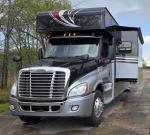
I'd say about 75% of my bay doors do not latch correctly on the first try. What I end up doing is having to play around with a little toggle on the latch to get it in just the right spot and then shut it again. Picking up some Lithium Grease spray in hopes that they are just poorly lubricated, but wondering if anyone else has experienced the same issue and if there is anything else I need to be looking for. Just drives me nuts every time I close a door.

a friend called with a 2001 with a problem that with the coach parked and key off and hwh leveling system is off that the rear drivers side would drop all the way in less than an hour.
i went to his place and had him air it up.
when he turned the engine off, there was a loud air noise. we checked the drivers side rear ride height valve and it was escaping air out the bottom port.
that to me meant the drivers side rear travel solenoid was leaking. i checked it and was not energized (put a screwdriver on the end of the nut holding the coil on and it was not magnetized....and with the key off it should not be)
we drained the air out of the system and as much of the airbag using the all down on the hwh panel.
took the drivers side travel rear valve out of the six pack manifold and i took the valve apart.
the buna seal on the center of the plunger that shuts the valve off was below the flush part of the stainless plunger, causing the valve to not seat properly and leak air through. i replaced the plunger and spring and we put it back in the six pack, aired it up and now the ride height valve was not escaping air when the key was off.
tom

We are currently working on a 1987 Newell Coach rebuild and are having the hardest time trying to locate the latches for the generator doors as well as the door handle. I am wondering if there is a way to locate these at all or if there is a solid looking alternate to use. Any help would be greatly appreciated.
09-01-2021, 09:57 AM
Forum: Coaches for Sale (Please read the info in the Category description)
- Replies (1)
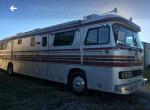
Im looking to sell my newell its a 40' with 153xxx miles 6v92ta Detroit engine, 5 speed Alison, 12.5kw generator 14xx hrs, 3 ac units, 2 water heaters, tires are 3 years old, etc. The coach is in very good shape inside and out but has been sitting for 3 years due to me moving across country for a new job and i don't have the time for it anymore. it does need a few items battery's and such that where stolen out of it. Asking 30k Text or call Dann 417-496-4337
does anyone know how to do it ? my unit is a 2004 45ft ,i know the slide open and close ,but there was a ceeling fire and some of the wiring above the stove are melted . i prefer not powering anything in the house until all electricity is properly re done . the bus part run and drive to perfection air is functional . someone here that has given me great advice mention i need 110 power and air ,but hooking the 110 is not something i want to do now ,i am sure there is a way to un lock and do this manually ?

We need help sourcing Brake Drum shoes for a Dana IFS63 front end.
They are 15 1/2 X 7 shoes which is a very odd size. If we can't find the brake shoes then at least the liners would be helpful. We found the brake shoe metal only on Find It Parts but they weren't lined.
I have attached the Dana parts list.
Anyone who has experience on this would be helpful.
Thanks
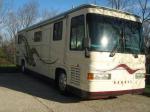
I need to do a rear brake job and was wondering if anyone knows the part numbers for the rear drums and shoes. It is a 1994 38 ft. No tag axle. Thanks, Paul

Is there a way to adjust the passenger armrest down?
I do some camping in parks where I put my rear wheels up to the curb stop at the back of the parking spot. I know Newells are low so when leveling will the 5" ish curb stop be a problem?
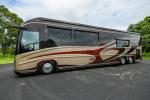
Yesterday with finished paperwork and final inspections. It ended up as a full day. I learned a lot. The front TV could not get over the air after it worked the day before, and the rear had no sound. Rear took 15 minutes to figure that the Harmony remote had the sound bar on MUTE!. The front took over an hour of troubleshooting - just as they ran and ready to replace the antenna cable, they dropped the connection center over the front door and the TV came on. They found that the antenna connection had vibrated loose and just fell off.
Megan spotted the passenger side Hella low beam beam cover had a hole in it - we ordered a new one for next week. Just when we were ready for me to take my first drive a mini monsoon came through with 40 mph winds and we nearly lost the awnings. After the rain-out, we started bringing in the slides the Valid went crazy with all kinds of errors. They called the Valid guru in Canada who said - It has to be water in the ECUs. Into the electronics bay, and sure enough, the front curb slide had leaked into the the ECUs via the molex connectors above the ECUs. To be sure they replaced both. We silicon-ed up the molex connectors. I put paper towels above and in the wiring to suffice while I figure out a diverter cover.
First trip included my first fueling and I parked about 8 inches too close - the folding bay door could be open. Some jockeying and we had 30 gallons and were on our way back. Megan was in the king bed and reporting that the ride was good.
Connected the F150 and we were on our way home. The drive was a dream - my last coach was a 95 U320, and the Newell is just amazing. The 12 speed is great and my low speed worries were no problem. The driver had been leaving the jake in high, and the trans did NOT like that in low speeds. I switched it to low or off for low speeds and it really smoothed things out.
I go back next week for some final parts. The guys at the Motorcoach Store in Bradenton are top notch. If you need repairs they are amazing and know their stuff. Most of them are from the Parliament Coach store up on St. Pete so they have years of coach building and repairs...
I have tons to learn...